
Logo

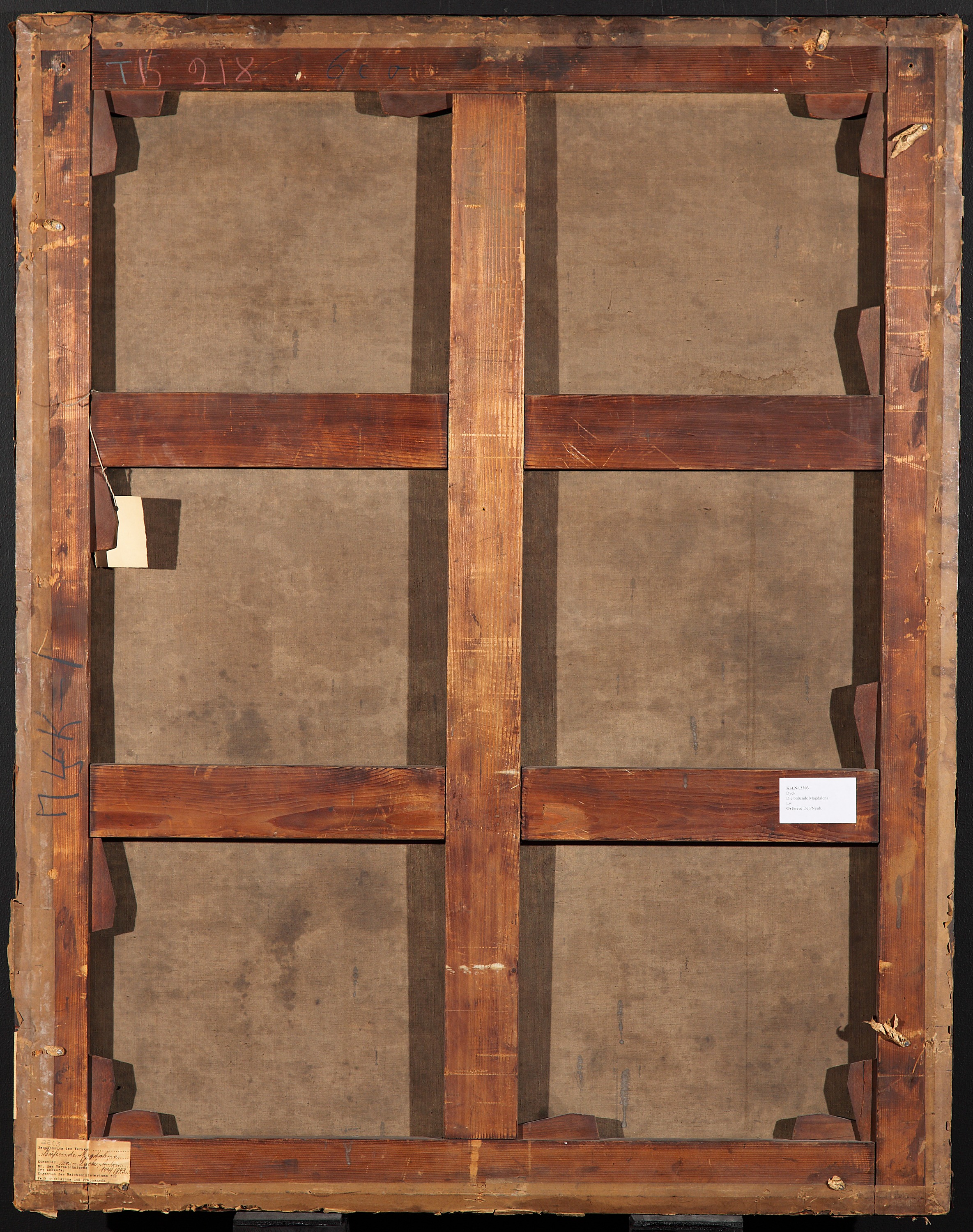
Die büßende Magdalena

Ident. Nr.: 2203

ObjID: obj:871995

Details (expert)

Creator/Entity
Ausführung: Giovanni Andrea de Ferrari (1598 - 25.12.1669),
Maler*in
frühere Zuschreibung: Anton van Dyck (1599 - 1641),
Maler*in
Date(s)
Ausführung: 1640
Systematics/Type
Additional titles
Collection title: Die büßende Magdalena
Translation: The Penitent Magdalene
Geographical references
Herstellungsort: Flandern,
Region
Material / Technique
Leinwand
Dimensions
Bildmaß: 112,5 x 92,5 x 2 cm
Acquisition
Ankauf 1958

Object Description

Diese Darstellung der Magdalena, früher dem Umkreis Anton van Dycks zugeschrieben, befand sich lange ungerahmt im Museumsdepot. Heute wird das Werk Giovanni Andrea De Ferrari zugeschrieben, einem Nachfolger von Bernardo Strozzi. In einem florentinischen Palatina-Rahmen wird hier diese Ergänzung zu den Beständen der Kunstmetropole Genua erstmals einer breiten Öffentlichkeit präsentiert.
-
This image of the Magdalene, formerly attributed to the circle of Anthony van Dyck, was long kept unframed in the museum depository. Today the work is assigned to Giovanni Andrea De Ferrari, a follower of Bernardo Strozzi. Now in a Florentine Palatina-style frame, this addition to the museum’s holdings from the art metropolis of Genoa is now being presented to a wider public for the first time.

Last updated: 05.11.2025

Contact

Institution:

Gemäldegalerie

Additional items from the collections

Bildnis eines jungen Mannes

Bildnis eines jungen Mannes

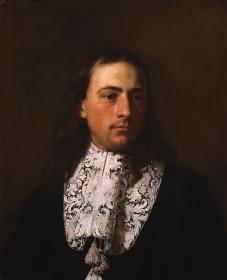
Versonnen blickt der dunkelhaarige junge Mann nach rechts in die Ferne. Von seinem schwarzen Gewand hebt sich ein kostbarer, weißer Spitzenkragen ab, auf den sein langes Haar fällt. Maratti präsentiert den Dargestellten hier schlicht und unprätentiös, zugleich jedoch sehr würdevoll und elegant. Durch eine Inschrift auf der Rückseite sind uns heute Entstehungsjahr und -ort des Gemäldes bekannt, sowie das Alter des Dargestellten. Als er sich 1663 in Rom porträtieren ließ, war er 24 Jahre und drei Monate alt. Maratti gehörte zu den begehrtesten Malern in Rom und arbeitete für die höchsten gesellschaftlichen Kreise, u.a. auch für Papst Clemens IX., dessen von Maratti geschaffenes Bildnis heute zu den bedeutendsten Porträts des 17. Jahrhunderts zählt.| Britta BodeSIGNATUR / INSCHRIFT: Auf der Doublierleinwand Transkription (des 19. Jh.) einer alten Inschrift: AETATIS VAE XXIV / ET III MENS / IN ROMA 1663 / C.M.F.___________________________________________________________________________With a pensive gaze, a dark-haired young man looks to the right into the distance. His long hair falls on the sumptuous, white lace collar that stands out against his black garment. Maratti presents the portrayed modestly and unpretentiously, yet also elegantly and dignified. An inscription on the back tells us the year and place of creation, as well as the age of the portrayed. In 1663, when he was painted in Rome, he was 24 years and three-months-old. Maratti was one of the most sought after artists in Rome and worked for the social elite, including Pope Clemens IX, whose portrait is considered one of the most important paintings of the 17th century.| Britta Bode