
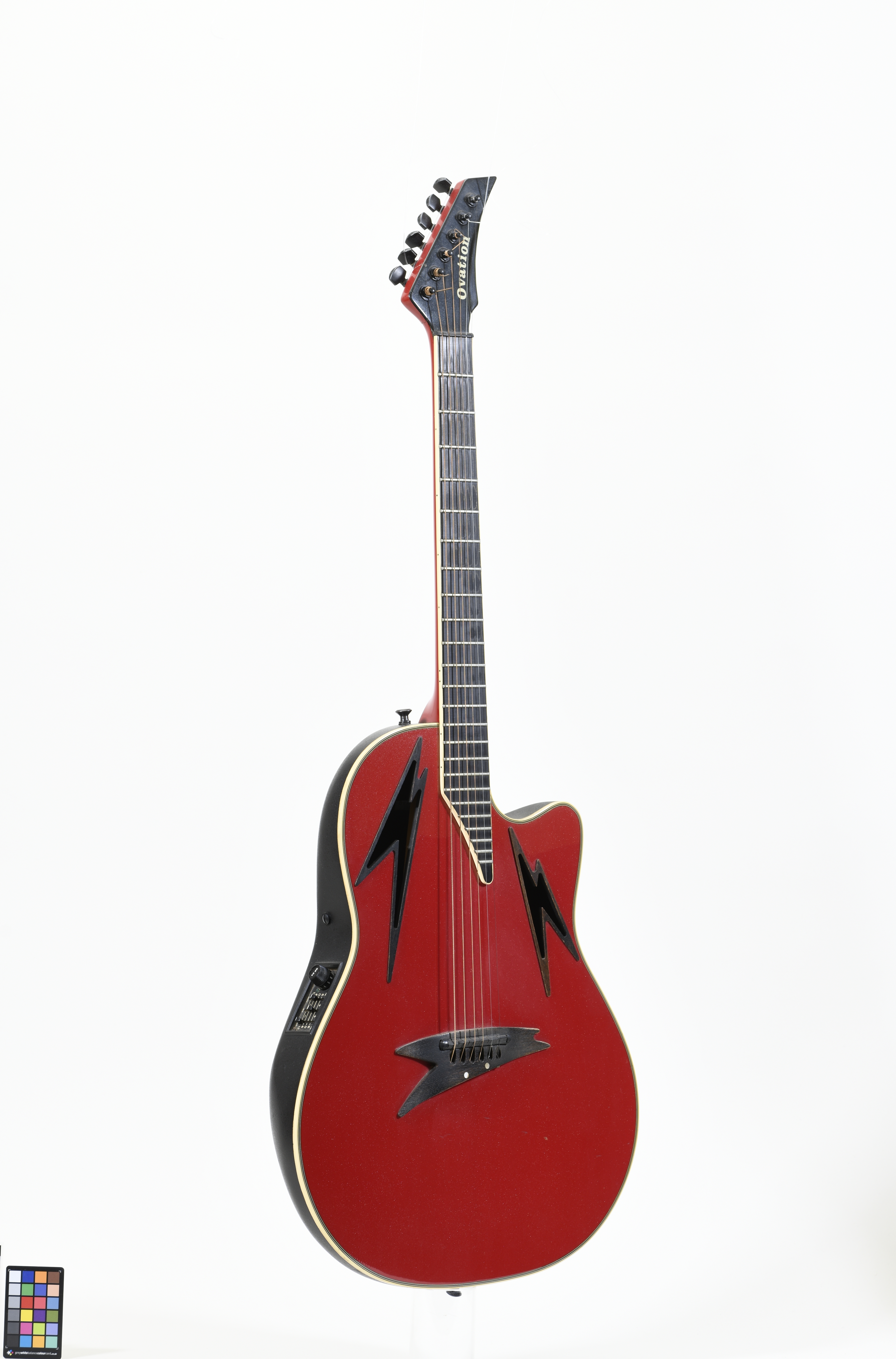
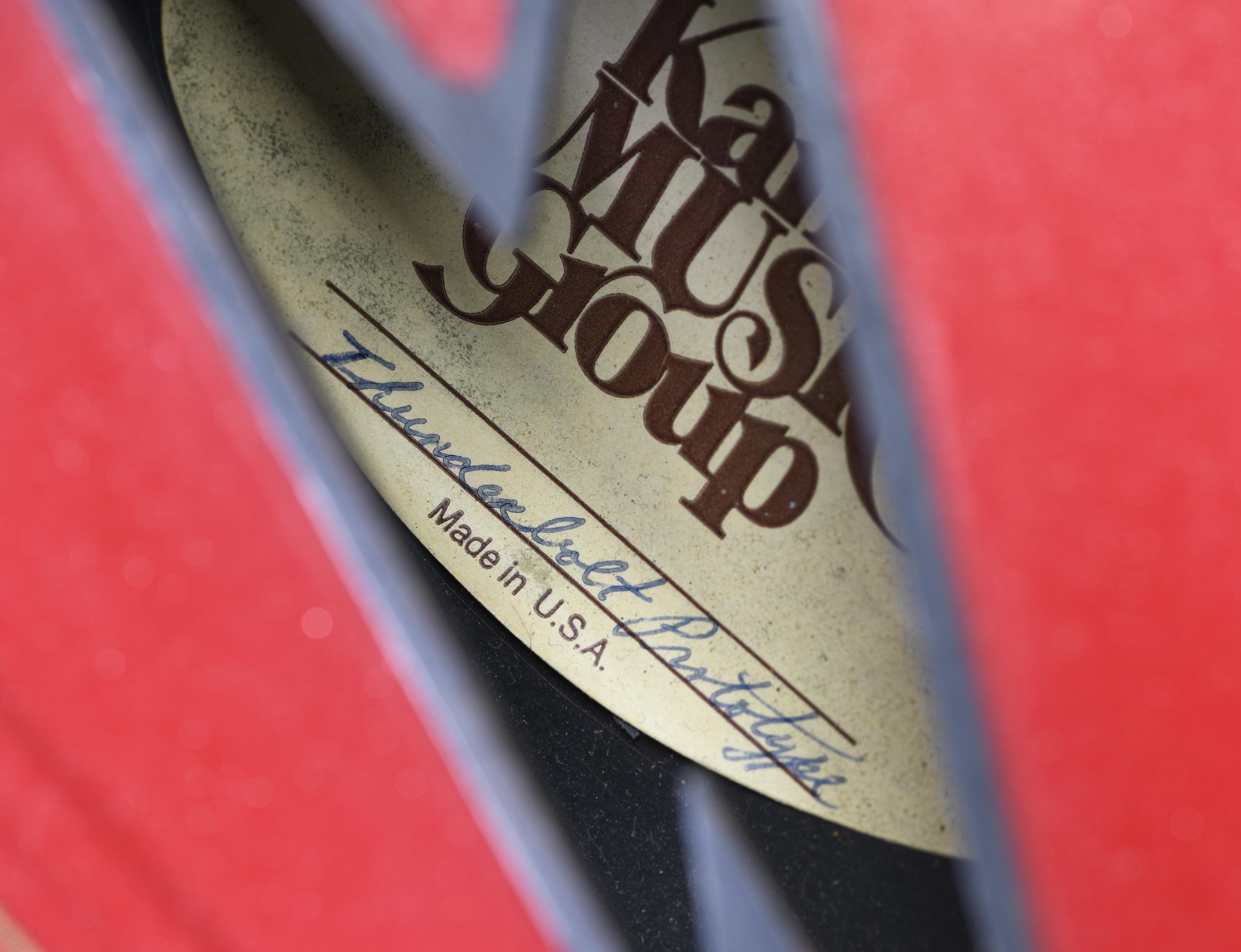
Ovation Thunderbolt TB-01 Prototype
Ident. Nr.: 6236
ObjID: obj:3920538


Details (Expert)
- Beteiligte
- Geografische Bezüge
- Material / Technik
- Nadelholz, Kohlefaserplatte "Lyrachord", Ebenholz, Zelluloid, Metall
- Abmessungen
- Länge x Breite x Höhe: max. 1035 x 405 x 125 mm (Instrument)Länge: 643 mm (umsponnene g'-Saite)Länge: 645 mm (umsponnene E-Saite)Länge: 642 mm (blanke e'-Saite)Breite: 405 mm (Korpus)Höhe: 104 mm (Korpus)Breite: 43,8 mm (Hals am Sattel)Breite: 53,8 mm (Hals am Übergang zum Korpus)Länge: 35 mm (Saitenabstand E-e' am Sattel)Länge: 55 mm (Saitenabstand E-e' am Steg)Dicke: 25,7 mm (Halsstärke am I. Bundfeld)Dicke: 31,1 mm (Halsstärke am XII. Bundfeld)Länge x Breite x Höhe: 150 x 84,5 x 17 mm (Kopf)Andere: Anzahl 18 ganze, 6 halbe (Bünde)Gewicht: 2,5 kg (Gitarre)Gewicht: 3,9 kg (Kasten)
- Permalink
- https://id.smb.museum/object/3920538
Objektbeschreibung
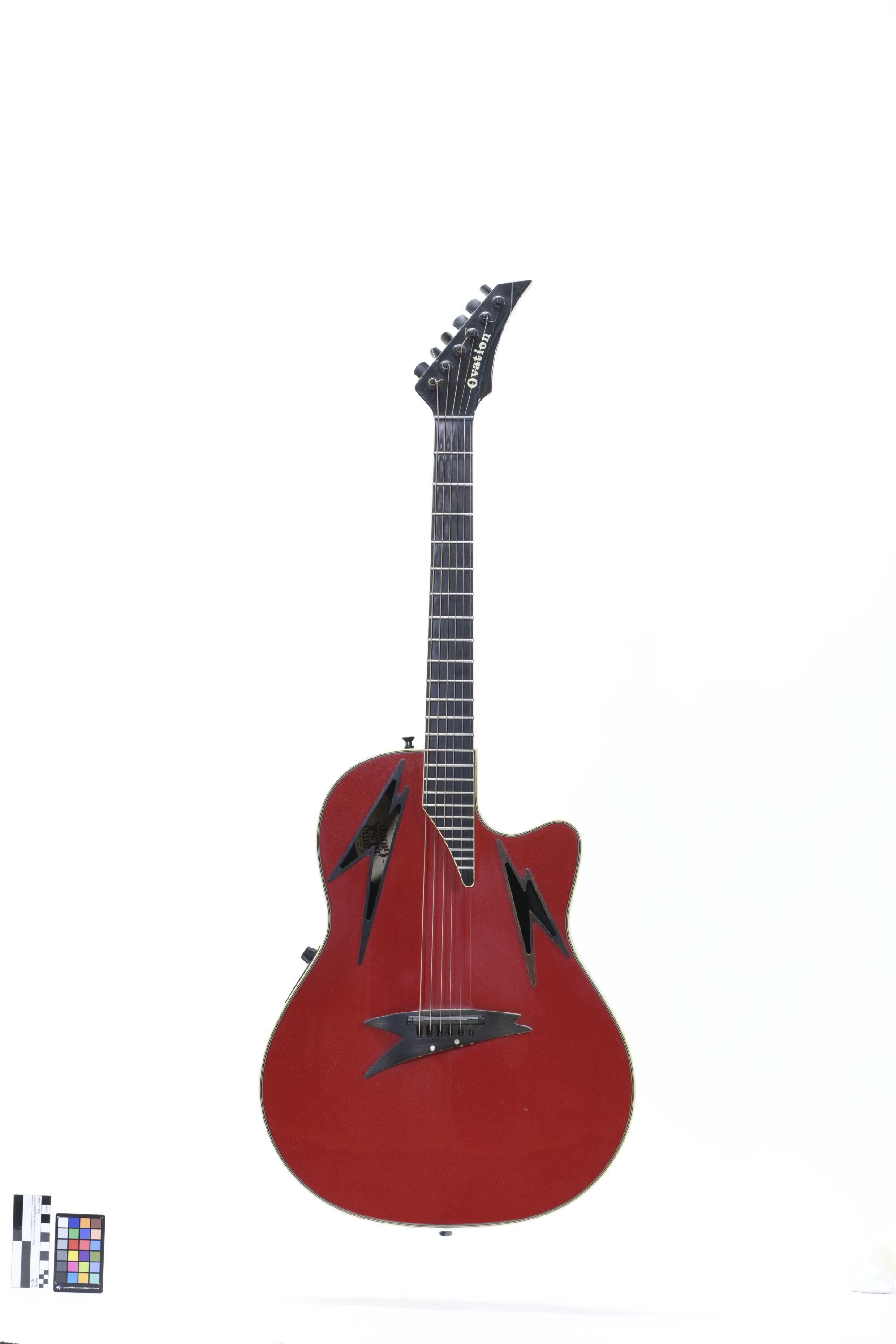
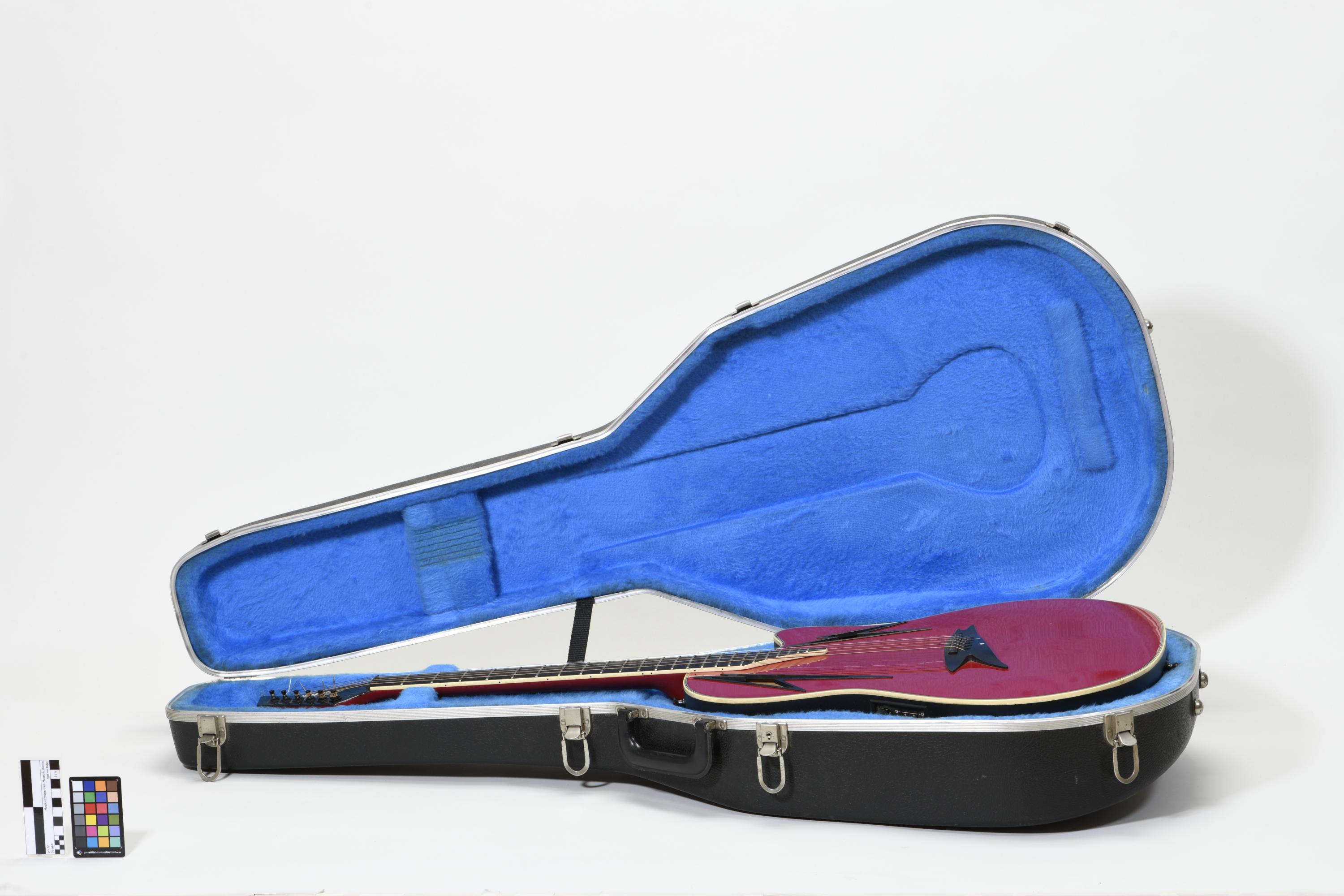
The Ovation Thunderbolt TB-01 is a
semi-acoustic guitar model that was produced in the United States by the
Ovation company in the late 1980s. Its roundback body shape with the
distinctive “Thunderbolt” soundholes is a visually striking feature that gives
the guitar its name.
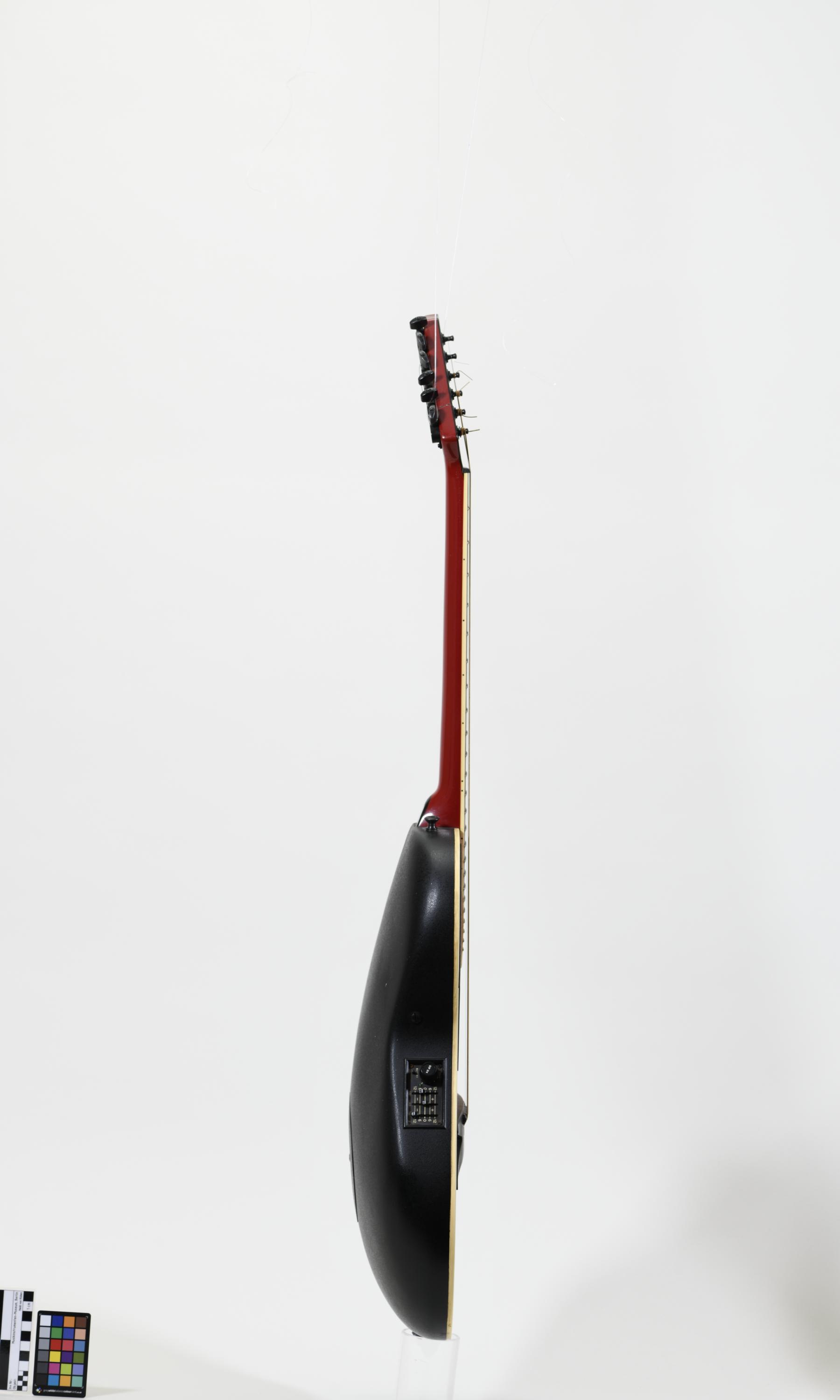
The instrument is equipped with an OP-24 preamplifier and a piezo pickup
located beneath the bridge, allowing it to be used both acoustically and
amplified. The neck is made of mahogany, the fingerboard of ebony, and the
guitar features 22 frets. The company’s founder, Charles Kaman, was originally
a helicopter engineer. As a result, several Ovation guitar models incorporate
carbon-fiber-reinforced plastics (CFRP) into their construction, including for
the soundboard. The production period of the Thunderbolt model was relatively
short, and only a small number of instruments were manufactured in various
finishes such as black, red, and pearl white.
This particular guitar comes from the estate of the renowned German guitarist Carlo Karges (1951–2002), who was active as a guitarist for the Hamburg-based band Novalis as well as a member of Nena’s band. He is the co-author of the successful German pop song “99 Luftballons,” which, following its release in 1983, quickly became an international hit due to its critical stance toward global political tensions.
Letzte Aktualisierung: 16.01.2026
Kontakt
Einrichtung:
Musikinstrumenten-Museum
E-Mail:
kontakt@sim.spk-berlin.de